Binding is easy to leave until the end, but it affects page count, margins and cost. Choose it first and design around it.
Saddle Stitch
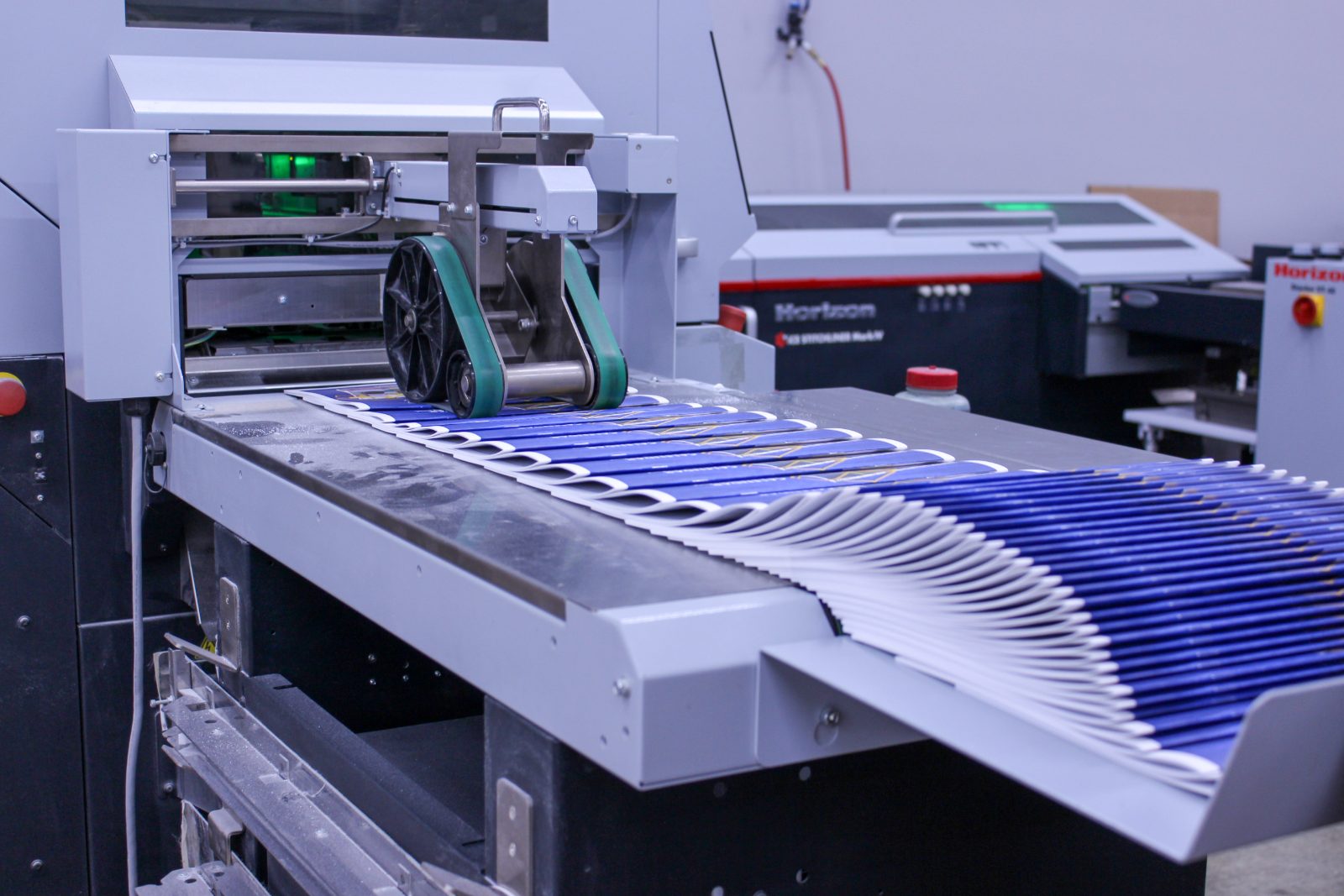
Folded sheets are nested and stapled through the fold. It is economical and fast, and suits programs, newsletters, catalogs and thinner booklets. Page count has to be a multiple of four, because each folded sheet makes four pages.
Perfect Binding
Pages are glued into a square spine under a wraparound cover, the way most paperback books are made. The spine can carry a title, which matters on a shelf. It suits annual reports, manuals and thicker catalogs, but needs enough pages to form a spine, and it does not lie flat when open.
Coil Binding
A plastic coil runs through holes punched along the edge. The book lies completely flat and folds back on itself, which makes it the practical choice for manuals, workbooks, cookbooks and anything used while working.
A Quick Guide
- Thin, economical, high quantity: saddle stitch.
- Thicker, polished, needs a printed spine: perfect binding.
- Has to stay open on a desk: coil.
Decide These Before Design
Settle the page count, since saddle stitch needs multiples of four. Leave extra inside margin for coil holes and for perfect binding, where pages curve into the spine. On thicker saddle-stitched books, inner pages push outward slightly; we account for that in prepress.
Binding is one part of our finishing and fulfillment work, alongside cutting, folding and storage. If the books ship in stages, see when to store and ship instead of reordering.